Building Healthy Communities
Building Healthy Communities focuses on creating healthier school environments to support healthy eating, physical activity, mental health, and well-being of students and staff.

Building healthy results
Building Healthy Communities has an extensive history of improving children's health in measurable ways. Most notably, the program is proven to significantly reduce obesity, reduce screen time by 19 minutes per day, and three-quarters of children now report that it's easier to pay attention in class.
A healthier future for Michigan's children
Childhood obesity affects children's health and their school performance. Blue Cross Blue Shield of Michigan founded the Building Healthy Communities program in 2009 to fight childhood obesity and lead children to a healthier future. It's grown into a collaboration among organizations committed to improving the health of children by preventing chronic diseases, reducing obesity and improving mental health and well-being. The program has reached 1,442 Michigan schools and more than 615,000 students since 2009.
Read about how the program has been improving children's health for more than 17 years.

Step Up for School Wellness
The Building Healthy Communities: Step Up for School Wellness program is recognized by health and education leaders as a successful and innovative program that empowers school health leaders, educators, administrators, families and communities to improve the health and well-being of students and staff. The program focuses on creating a healthier school environment and building a culture of wellness that supports physical activity, healthier food choices, mental health and overall well-being.
Who's eligible?
Any public, charter or private nonprofit school serving grades K-12 in Michigan is eligible regardless of their:
- Geographic location
- Participation in other school wellness grants, programs or initiatives
- Free and reduced-price school meal percentage
Please review the program description for other eligibility information.
How can I learn more?
The Building Healthy Communities: Step Up for School Wellness request for applications, also known as RFA, document and website have a detailed program description and information on how to apply for the program.
Applications are no longer being accepted for the 2026-2027 school year.
To learn more and apply, visit the Step Up for School Wellness website.
Program partners
- Blue Cross Blue Shield of Michigan
- Michigan Department of Health and Human Services
- Michigan Department of Education
- Michigan Recreation and Park Association
- Michigan Virtual
- OK2SAY
- United Dairy Industry of Michigan
- University of Michigan School of Kinesiology
- Wayne State University's Center for Health and Community Impact
Program Benefits
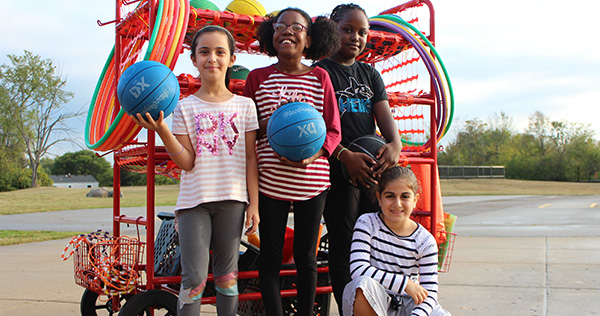
The Building Healthy Communities programs educate students through lessons in the classroom and gymnasium while creating an environment that makes the healthy choice the easy choice.
- Encourage students to practice lessons learned
- Provide opportunities for physical activity
- Improve access to healthy food and beverages
- Address mental health, trauma and well-being
- 40% more fruits and vegetables consumed than the national average
- 700 more steps taken per day
- 35 more minutes per week of moderate to vigorous physical activity