
Parents' Guide to Mental Health
You have the most important job in the world. But sometimes it can feel like the world is on your shoulders. Let us help you through it. Explore this guide to get strategies for your kids’ well-being, and yours.

Caring for your children and yourself
The past few years have been challenging for families everywhere. In some ways, we’ve gotten closer, and in others, we’re ready for a break. Despite these unique times, one thing remains: The well-being of your children is everything.
Your Blue Cross Blue Shield of Michigan plan has options to care for your kids’ mental health needs, just like it does their physical ones. And, don’t forget — you matter, too. These options extend to everyone on your plan, including the people your kids call Mom and Dad.
Crisis assistance
National Suicide Prevention Lifeline
If your situation requires immediate assistance to prevent death or serious harm to yourself or others, please seek help at
your nearest emergency room or call the Suicide & Crisis Lifeline at 988 lifeline or 1-800-273-8255.
National Domestic Violence Hotline
Call 1-800-799-7233 for anonymous, confidential support 24/7.
Michigan-Based Crisis Care
We also have in-person crisis care options in many locations throughout the state. Learn more about our crisis centers.

What is co-regulation?
Co-regulation is a process that helps children learn how to manage their emotions in a healthy way from a young age. This helps them understand how to have healthy relationships and learn to self-regulate, skills that will help them for the rest of their lives.
Learning co-regulation can help children make better decisions, reduce stress and avoid impulsive decisions. It's useful for children of all types, and is often used in therapy for children with ADHD or autism.

1 OF

Don't apologize for needing a full night's sleep
Parents can function better when they're fully rested. And while it's not always easy, it's important for parents to get enough sleep to deal with the daily challenges of parenting and life in general.
With tips and techniques, you can learn how to get healthy sleep and take on the morning in a better frame of mind.
Talk to your primary care physician or pediatrician
You can speak with your child’s family doctor or pediatrician if you have concerns about any aspect of your child’s health — including their mental health. Your child’s doctor can offer their medical opinion, help you help a child with anxiety and provide you with a list of referrals if needed.
Don’t have a regular doctor for your child? You can log in to your Blue Cross Blue Shield of Michigan member account to find one.

Traumatic childhood events and mental health
Children who have experienced traumatic events can develop an increased risk of mental and physical health problems later in life. These can include depression, anxiety, substance use and chronic diseases.
Here is a look at how traumatic events in childhood can affect mental health, signs of mental health problems in children and where parents can get help.
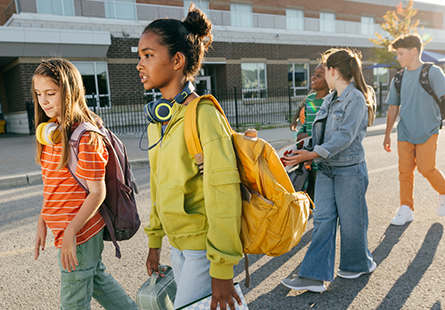
Back to school and mental health
Heading back to school can be a sign of stress for students of any age. And while the pandemic added an extra source of strain, each new school year provides its own set of challenges that can affect a child's mental well-being.
Learn to watch for anxiety and depression symptoms in children and teens, and find out what you can do if you have those concerns.
Related guides
Guide

Guide

The National Suicide Prevention Lifeline and National Domestic Violence Hotline are independent companies, not affiliated with Blue Cross Blue Shield of Michigan.
The information contained on this webpage is for educational purposes only. Nothing on this webpage is intended to be, nor should be used as or relied upon as, professional medical advice. Nothing contained on this webpage is intended to be used for medical diagnosis or treatment. For medical advice, or to receive medical diagnosis or treatment, consult with your health care provider.